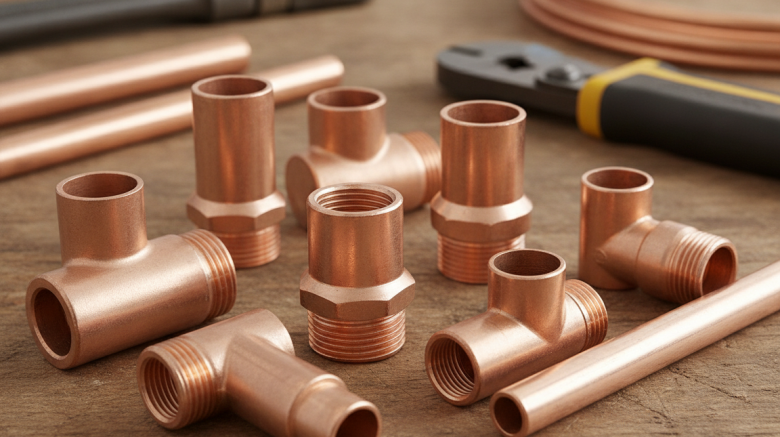
Compression fittings offer a trusted method to join copper pipes, eliminating the need for welded joints or soldering. These connectors are often used by licensed plumbers and homeowners because they make installations faster and easier. A typical assembly contains a fitting body, a compression ring or ferrule, and a compression nut. As the nut is tightened, it presses the ferrule and forms a tight seal around the tube.
3 8 X 1 2 Compression Fitting
For a reliable installation, follow several proven fitting practices. Start by making square cuts and deburring the tube end. Next, check the end for any damage. Then, hand-tighten the nut before applying a wrench. Use two wrenches so the fitting body is held steady and the pipe does not twist. Remember, do not use overtightening and never reuse a compressed ferrule to preserve a leak-free joint.
Compression fittings are commonly preferred over soldering for many applications. They remove the need for a flame and are reusable in many scenarios. Their quick setup in tight spaces is a major advantage. However, they are bulkier than soldered joints and may not be ideal in high-stress locations or hidden areas that are hard to inspect. It is essential to use matching components and follow the manufacturer’s torque or turn specifications for best performance.
- Copper tubing can be joined with compression fittings without soldering or open flame.
- Main parts: fitting body, ferrule olive, and compression nut.
- For dependable seals, make straight cuts and deburr the tube end.
- Use two wrenches and avoid overtightening to prevent leaks.
- Select brass or other compatible materials and follow the manufacturer’s instructions.
How Compression Fittings Work And What They Are
A compression fitting secures tubing without requiring solder, flame, or heat. They use a basic threaded connection. This connection compresses a ring against the pipe to form a seal. They are especially valuable in confined areas and field repairs where a fast, dependable connection is needed.
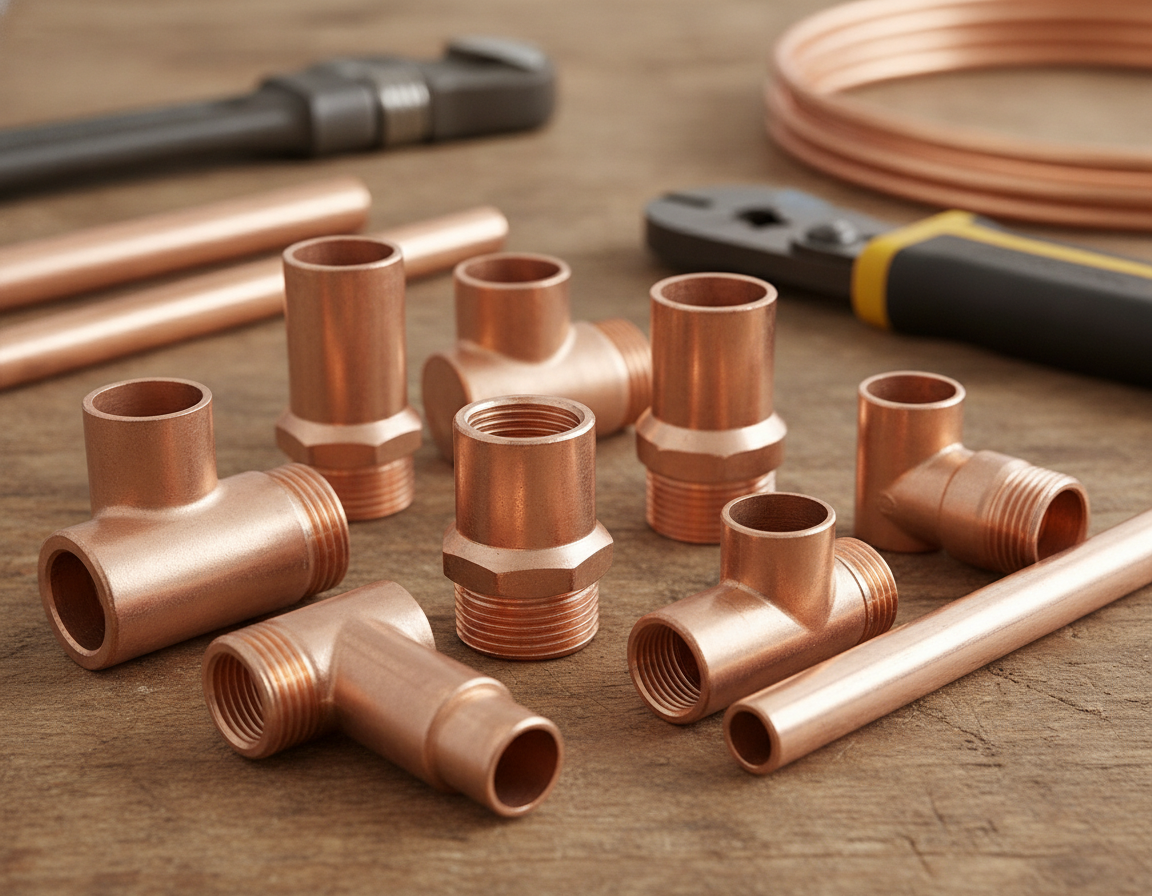
Basic Components
The core components are the fitting body, the ferrule, and the compression nut. The body contains the seat and thread. The ferrule, often called an olive, fits between the nut and the pipe. When the compression nut threads onto the body, it pushes the ferrule into position.
Compression Sealing Principle
The seal is created through radial compression. As the compression nut is secured, the ferrule moves axially into the tapered bore of the body. That movement causes the ferrule to deform slightly and press against the outside diameter of the tubing.
This creates a line-contact seal that secures the tubing and helps resist leakage. The ferrule’s shape and material have a significant effect on seal performance when pressure or temperature changes.
Common Industry Names And Variations
Different trades use varied terms for the same idea. In plumbing supply and HVAC catalogs, terms such as compression joint, compression couplings, and compression nut are common. In instrumentation work, vendors list compression joints and compression fittings plumbing alongside flare and push-fit options.
| Name | Typical Use | Key Feature |
|---|---|---|
| Compression nut | Plumbing and gas lines | Threads tighten to drive the ferrule |
| Olive | Instrumentation and mechanical service lines | Deforms to seal and grip tubing |
| Compression connection | Quick field connections | No-solder assembly, reusable in many cases |
| Straight compression couplings | Straight pipe joining and extensions | Ferrules seal both sides of a straight coupling |
| Compression plumbing fittings | Home and commercial water systems | Wide material options and sizes |
Compression Fittings For Copper Tubing
Material selection is central to compression-joint performance. It affects performance, long-term durability, and corrosion risk. Copper fittings are usually a compatible match for copper tubing. Their similar thermal expansion characteristics help maintain consistent metal contact.
Brass compression fittings, on the other hand, provide ductility. This characteristic assists in forming reliable seals without damaging the tubing.
Stainless steel compression fittings are ideal for high-pressure or high-temperature systems. They also resist many aggressive fluids. Plastic compression fittings are useful for low-pressure domestic water lines. They avoid metal-to-metal contact and can reduce dissimilar-metal problems.
Materials should be matched to the job, pressure rating, temperature, and fluid type. In refrigeration and many plumbing uses, copper or brass parts are often preferred. They limit mixed-metal stress. For applications requiring high mechanical strength, stainless steel is a better choice. Just remember, its harder ferrules can deform soft tubing if not sized correctly.
When using copper tubing, do not use it with carbon steel or other dissimilar metals. Galvanic corrosion can quickly accelerate deterioration where the metals meet. This cuts down the service life. If mixed metals are unavoidable, use dielectric unions, insulating sleeves, or choose compatible materials to limit electrical contact.
Before assembly, inspect the tube surface, finish, roundness, and wall rigidity. Good surface quality allows the ferrule to bite evenly and create a lasting seal. Always use the manufacturer’s compatibility guidance before mixing materials. Following that guidance helps reduce leaks and extend joint life in real-world service.
Compression Tee And T Fitting Types And Sizes For Copper Tubing
Choosing the right compression tee is critical, influenced by flow needs, space constraints, and tubing sizes. These fittings are important in plumbing, refrigeration, and instrumentation. A proper match between ferrule geometry and body taper is essential for leak prevention.
Branching And Tight-Space Variants
Straight tees ensure full flow through three aligned ports. Branch tees send flow into a side line without sharp turns. Compact tees fit into tight spaces where standard tees won’t. They support common residential sizes, including Compression Tee 1/2.
Common Compression Tee Sizes And Cross-Fit Choices
Installers commonly choose parts by tube OD or nominal size labels. Popular choices include the 1/4 Compression T Fitting and the 1/2 Compression T Fitting. The 1 4 Tee is common for small-diameter runs. For larger branches, the 1/2 Inch Compression Fitting and 1/2 OD Compression Fitting are common. Cross-fit options such as 1/2 X3/8 and 3/8 X 1/2 Compression Fitting make it possible to mix sizes when required.
Combination Tees And Adapters
Combination tees, such as the 1/2 X 1/2 X 3/8 Tee, cover transitions between sizes. A 1/2 X3/8 adapter steps a 1/2 line down to a 3/8 branch. The 1 2 To 1 4 Compression Fitting gives a compact reduction for instrumentation taps, sensors, or small branches.
Brass Tee And T Joint Choices
Brass is the preferred material for copper tubing connections due to its corrosion resistance and thermal expansion compatibility. For durable connections, look for T Brass Fitting options. The 1/2 Brass Tee and 1/2 Tee Brass are common choices for main lines and branch runs. Before mixing brands, confirm thread pitch, ferrule fit, and body taper for a reliable seal.
| Fitting Style | Common Use | Common Size Labels | Material Considerations |
|---|---|---|---|
| Straight Tee | Main run with branch inline | 1 4 Tee and Compression Tee 1/2 | Brass is commonly preferred with copper tube |
| Side Tee | Side branch off the main line | 1/2 Compression T Fitting, 1/4 Compression T Fitting | Use matched ferrules and bodies |
| Low-Clearance Tee | Tight spaces and wall cavities | Compression Tee 1/2 and 1/2 Inch Compression Fitting | Short body length, same sealing principle |
| Mixed-Size Tee | Size transitions and instrumentation | 1/2 X 1/2 X 3/8 Tee, 1/2 X3/8, 3/8 X 1/2 Compression Fitting | Adapters available: 1 2 To 1 4 Compression Fitting |
| Brass T Joint | Durable copper-compatible branches | Common labels include T Brass Fitting | Matches copper; check pitch and taper |
Choosing Compression Fittings Instead Of Soldering Or Other Methods
Choosing the right joint depends on the job’s conditions and the fitting’s capabilities. Compression fittings are useful for tight spaces and areas near flammable materials, as they don’t require flame. Soldering, on the other hand, is better for making a lasting bond in visible, permanent installations.
Why Compression Fittings Help In Tight Spaces
No-flame fittings are useful for emergency repairs and retrofitting, as they avoid the need for hot work permits or torches. They usually need only basic hand tools, which makes them useful for fast repairs. In low-stress systems, limited reuse may be possible, which can help during testing or section replacement.
Durability Limits And Fitting Profile Issues
Compression fittings add bulk compared to soldered seams. Ferrules can make it difficult to remove fittings, limiting their reusability. In systems with vibration or pulsation, compression joints may loosen over time, so soldered or brazed connections may be better.
Choosing The Right Method By Application
For plumbing repairs in tight spaces, compression fittings are useful when a no-flame connection is needed. Where neat appearance and low profile matter, soldering may be the better option.
In some gas-line work, compression fittings may be used for short runs. Always check local codes and use approved materials. Inspect joints regularly so safety is maintained.
For HVAC and refrigeration, select copper fittings rated and designed for refrigerants. Where thermal cycling is heavy, brazed or flare joints may outlast compression fittings. Compression fittings, like a Compression Tee Fitting or T Compression Fitting, are suitable for service taps and temporary connections.
For instrumentation, select fittings that support leak-tight, high-pressure, or high-purity lines. Stainless-steel compression options are strong, but confirm they meet pressure and media ratings before installation.
| Comparison Factor | Compression Joint | Soldered/Brazed Joint |
|---|---|---|
| Tools Required | Wrenches, minimal tools | Torch work with flux and filler |
| Installation Speed | Quick for many repairs | More preparation and cooling time |
| Joint Size | Higher bulk | Slimmer finished appearance |
| Reusability | Possible but limited; reuse compression fittings varies | Not reusable; permanent bond |
| Dynamic Stress Performance | Moderate, with loosening possible | High; rigid joints |
| Usual Jobs | Plumbing repairs, gas lines, HVAC service tees | Low-profile permanent installations |
Match the fitting type to the system’s needs, adhering to pressure, temperature, and material compatibility guidelines. Compression Tee Fittings and T Compression Fittings can be useful in plumbing, gas-line work, HVAC fittings, and instrumentation when a serviceable or flame-free connection is needed.
Step-By-Step Compression Fitting Installation Guide
Effective installation starts out with thorough preparation and a well-ordered sequence. Every step matters because poor preparation can cause leaks or damage. This guide will outline installing compression fittings on copper tubing and when to seek parts or tools from Installation Parts Supply.
Preparing copper tubing correctly is essential for a good seal. Use a tubing cutter to cut it squarely, then remove any burrs with a reamer. Inspect the tube end for any nicks or deformations. Before assembly, clean the tube and inspect the fitting body, nut, and ferrule for damage.
Begin by sliding the nut onto the pipe, ensuring the threads face the end. Next, place the ferrule olive on the pipe. Push the pipe fully into the fitting body and make sure the ferrule is positioned correctly. Hand-tighten the nut, then use a wrench to align the parts before applying final torque.
Correct tightening is essential to a secure seal. Use two wrenches to hold the fitting body while tightening the nut. Follow the manufacturer’s instructions for rotation-based turns, not just torque readings. Do not over-tighten, because too much force can flatten the ferrule and cause leaks.
Replacement ferrules are often required after disassembly. Once an olive or ferrule has been compressed, it should not be reused. If a ferrule is stuck, use a ferrule puller or carefully cut and remove it to avoid damaging the fitting body.
Plastic tubing usually needs an insert to maintain shape under compression. Copper tubing does not need inserts. After reassembly, slowly open the supply and check for leaks. If necessary, tighten incrementally. For compatible parts and detailed specifications, refer to Installation Parts Supply.
Ferrule Design Details That Affect Compression Performance
The choice of ferrule strongly affects a compression joint’s performance under pressure and over time. Whether opting for a single-piece or two-piece ferrule, each has its advantages and considerations. Ferrule design must match the tubing material, tube size, and fitting body geometry to create a secure, lasting seal.
Ferrule shapes and materials
Brass and stainless steel are the most common materials for ferrules. For chemical resistance, high temperature, or specialty service, graphite or specialty alloy ferrules may be used. A one-piece ferrule is simple to install and can work well with softer copper tube. A two-piece ferrule adds a rear ferrule that helps control rotation and reduce galling, especially in stainless systems.
Choosing asymmetrical or symmetrical ferrules
An asymmetrical ferrule is installed in a specific orientation, promoting consistent performance. It is commonly preferred where reliability requirements are high. A symmetrical ferrule can usually be installed either way, making assembly faster. However, it may perform less reliably on hard plastics where OD tolerance variations can contribute to leaks.
Seal geometry: line-contact versus surface-contact seals
The design of the ferrule influences whether it uses a line contact or surface contact seal. Line contact seals are better suited to creep and vibration. Over-tightening can, though, convert a line contact seal into a surface contact, increasing the risk of leakage over time.
Tube quality and material behavior considerations
Metal tubing must have smooth walls and precise cuts to allow proper ferrule seating. Copper tubing from coils can have slight shape irregularities that influence sealing. Soft plastics and PTFE exhibit cold flow and creep under compression, leading to a loss of seal integrity over time.
Reducing PTFE cold flow and soft tubing problems
To reduce PTFE cold flow, consider tubing inserts, backup seals, or internal O-rings. Hardened ferrules may help distribute load more effectively. In high-pressure or high-purity environments, select materials and lubricants that minimize galling and residue. Ensure that the ferrule material matches the tubing and application requirements to maintain a reliable seal throughout its service life.
Troubleshooting Compression Fittings And Avoiding Common Mistakes
When troubleshooting compression fittings, start with the basics: check the nut tightness, tubing alignment, and ferrule condition. Small leaks often stem from an under-tightened nut or an improperly seated ferrule. To prevent tubing damage, hold the fitting body with one wrench and tighten the nut with a second wrench.
Problems from overtightening may include crushed ferrules, distorted pipe, and leaks that do not stop. Over-tightening can damage the copper tubing or flatten the ferrule, leading to a poor seal. When tubing is flattened or a ferrule is gouged, cut back the tube and install a new ferrule and nut.
Under-tightening can leave a small gap that allows slow seepage. For minor weeps, apply small, incremental turns with a wrench until the leak stops. Use gradual tightening to avoid over-compressing the ferrule while still achieving a reliable seal.
Misalignment or twisting can keep the ferrule from compressing evenly. Make sure the tubing enters the fitting body straight and seats fully. If the ferrule is misaligned, it can jam or become difficult to remove. Remove a stuck ferrule with a ferrule puller or carefully cut it away while protecting the tubing.
Identifying and fixing leaks starts with checking ferrule seating, tube condition, and fitting parts. Any damaged ferrule, nut, or fitting body should be replaced. For a quick fix, incremental tightening can stop small leaks until a proper repair can be scheduled. If leakage continues, re-cut the tube end, replace damaged parts, and reassemble the fitting.
Dealing with corrosion and galling requires both repair and prevention. Corrosion can pit the sealing surfaces, leading to recurring leaks. Galling can lock nuts and bodies, making them difficult to remove. For stuck nuts, apply penetrating oil and allow time for it to soak in. If threads or faces are damaged, replace the affected components.
Correct material selection helps prevent corrosion, galling, and premature failure. Avoid pairing carbon steel with copper to prevent galvanic reactions. Choose ferrules and fittings suited to the system’s chemistry, pressure, and temperature. In cleanroom or high-purity environments, volatile cleaning agents can increase galling risk; use ferrules designed to resist galling and compatible lubricants when allowed.
Stuck nut recovery usually starts with penetrating oil and careful patience. If the nut won’t budge, cutting and replacing the nut and ferrule may be faster than prolonged attempts. Use proper tools to avoid damaging the fitting body.
When a compression joint is not the right choice, consider alternatives. Systems exposed to constant vibration, long-term dynamic stress, or strict low-profile needs may benefit from soldering, mechanical crimp systems, flare fittings, or welded joints. Compare soldering vs compression for permanence, profile, and code requirements when planning a repair or new installation.
| Problem | Likely Cause | Immediate Fix | Permanent Solution |
|---|---|---|---|
| Slow leak | Under-tightened nut or mis-seated ferrule | Tighten gradually using two wrenches | Replace ferrule and nut; re-cut tube end |
| Persistent leak after tightening | Overtightening damage to ferrule or tubing | Remove damaged section and install new nut and ferrule | Use manufacturer tightening guidance every time |
| Ferrule or nut will not release | Ferrule bite, seat deformation, or galling | Use penetrating oil, ferrule puller, or careful cutting | Use compatible materials that reduce galling |
| Corroded compression joint | Galvanic reaction or aggressive fluids | Replace corroded parts | Select compatible metals; follow code for gas lines |
| Joint fails under vibration | Compression fittings not intended for dynamic stress | Monitor and secure lines to reduce movement | Choose soldered, welded, crimped, or flared alternatives |
Final Thoughts
Copper Tubing Compression Fittings conclusion: compression fittings provide a versatile, flame-free solution for copper tubing in various fields. They work well when materials are matched and installation techniques are followed correctly. Brass, copper, stainless steel, and certain plastics are compatible, provided they avoid galvanic corrosion and thermal mismatch.
Installation Parts Supply guidance emphasizes replacing ferrules during reassembly and tightening fittings according to manufacturer specifications. This helps maintain reliable sealing.
Choose compression fittings for simple repairs, confined spaces, and removable joints. They have limitations compared to soldered connections. Long-term performance depends on ferrule design, tube quality, material compatibility, and correct assembly order.
In high-pressure or high-vibration service, choose ferrules and fittings rated for those conditions. When compression fittings are not suitable, consider soldering, brazing, crimping, flaring, or welding.
This summary highlights the value of careful installation and routine inspections. Ensure cuts are square and deburred. Use the sliding nut and ferrule correctly, add an insert where required, hand-tighten first, and finish with measured wrench turns.
Use manufacturer torque or turn-count guidance to avoid leaks, ferrule damage, and tube distortion. For matching parts and compatible ferrules, check with qualified suppliers. Look for suppliers that carry 1/4 Compression T Fitting, 1/2 Compression T Fitting, and brass tee options suited to the project.
Related: When To Use A 1 1 4 Compression Tee For Split Water Lines